Gardening Waterloo: Recycling and Sustainability for an Eco-Friendly Community
 Gardening Waterloo is committed to creating an eco-friendly waste disposal area and a thriving sustainable rubbish gardening area across the neighbourhood. Our recycling and sustainability approach balances practical yard operations with community impact: reducing landfill, increasing material reuse, and designing green waste systems that work for local gardens, allotments and public planting schemes. This page outlines our targets, partnerships, local infrastructure, and the low-carbon logistics that make these goals achievable.
Ambitious recycling percentage target
We have set a clear recycling percentage target to drive progress: a borough-wide aspiration of 65% household and garden waste recycling by 2030, with an interim target of 55% by 2026. For garden-specific streams we aim to divert 80% of green waste from landfill by 2028 through enhanced composting, mulching and reuse. These targets align our sustainable gardening waste ambitions with wider municipal objectives and create measurable milestones for the Gardening Waterloo programme.Connecting to local transfer stations and civic sites
 Gardening Waterloo integrates with nearby transfer infrastructure — from council-run civic amenity sites to borough transfer stations — ensuring that materials collected from pruning, turfing and site clearances are handled responsibly. We work with transfer yards that accept segregated streams for wood, green waste, soils and inert materials, and we prioritise facilities that support anaerobic digestion or municipal composting for food and soft garden waste. The boroughs’ kerbside separation systems for paper, glass, metal, food and garden waste make it easier to route material to the right processing stream.
We build enduring relationships with community and national charities to maximise reuse. Gardening Waterloo partners with local charitable groups and social enterprises that accept surplus materials—pots, raised bed timber, tools and reusable planters—to extend product life and support community growing projects. These collaborations create a circular channel for items that are still serviceable rather than recyclable, and they foster local employment and training opportunities in green skills.
 Our logistical approach includes a low-carbon fleet strategy: electric vans for urban collections, hybrid vehicles for longer ranges, and pedal-assisted cargo bikes for tight central streets and last-mile deliveries. Fleet upgrades are combined with route optimisation software to reduce mileage, idle time and emissions. We aim to run 60% of our operational mileage on low-emission vehicles by 2027 and to pilot fully electric garden maintenance vans on high-use routes.
How recycling activity is organised locally: the boroughs around Waterloo favour multi-stream separation to improve material quality. Typical local streams include:
- Glass, cans and mixed containers
- Paper and cardboard (clean and dry)
- Food waste for anaerobic digestion
- Green/garden waste for composting and bulking
- Textiles and small electricals via dedicated drop-off points
Sustainable rubbish gardening area design
Designing an effective rubbish gardening area is about clear separation and practical reuse: labelled bays for wood, compostable material and inert spoil; secure, ventilated compost bays; and designated bins for recyclable plastics used in horticulture. We recommend combining covered storage for reusable pots with an area devoted to curing woodchip and leaf-mould. This approach reduces contamination and produces higher-grade outputs for soil improvement.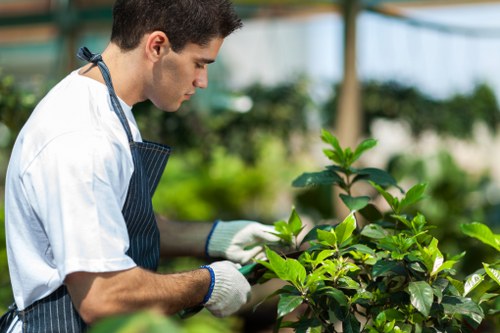 Partnerships with charities and rescue schemes are central to minimising waste. We collaborate with community gardens, allotment associations and local environmental charities to redistribute items such as plant supports, reclaimed timber and surplus topsoil. Partner organisations run collections and workshops that turn what would be waste into resources—strengthening local networks and ensuring functional materials are kept in active use rather than being discarded.

Practical actions that meet our targets
To reach our recycling targets and maintain an eco-friendly waste disposal area, Gardening Waterloo focuses on: preventing contamination at source, increasing on-site composting capacity, scheduling scheduled transfers to authorised transfer stations, and expanding the low-carbon fleet. We track diversion rates monthly, share progress with community partners and continuously adapt collection methods to borough-level waste separation policies. Together these measures support a resilient, low-carbon approach to sustainable gardening and green waste recycling across Waterloo.Conclusion: Gardening Waterloo’s recycling and sustainability plan is practical, measurable and collaborative. By combining a clear recycling percentage target, coordination with local transfer stations, strong charity partnerships and a transition to low-carbon vans, we are creating a scalable model for a greener, cleaner urban gardening ecosystem. Our work turns garden rubbish into resources, reduces carbon impacts and helps the wider community grow sustainably.